
WHEN YOUR BRAIN WORKS DIFFERENTLY, AND THE WORLD HASN'T CAUGHT UP.
Neurodivergent Affirming Therapy in Sierra Madre, CA
Services available virtually throughout California & Utah
You've spent years wondering why things feel harder for you than they seem to for everyone else. Maybe you've been told you're too sensitive. Too intense. Too much, or somehow never quite enough.
You've pushed through, adapted, and held it all together. And you are exhausted in a way that rest doesn't fix.
Neurodivergent affirming therapy isn't about fixing you. It's about finally understanding yourself, and building a life that works with your nervous system, not against it.
DOES THIS SOUND LIKE YOU?
If This Feels Familiar…
⟡ You feel everything deeply. Sounds, emotions, transitions. The world has always hit you a little harder than it seems to hit everyone else.
⟡ You work harder than everyone else just to keep up, and you can't figure out why it's not getting easier.
⟡ You find yourself asking, "Why can't I just handle this?” And then hating yourself a little for asking.
⟡ You're perpetually burned out, not because you're lazy, but because you've been masking who you are for a very long time.
⟡You were recently diagnosed (or you're starting to wonder if neurodivergence explains your whole life) and you don't know what to do with that yet.
⟡ You've been in therapy before and felt like something important was being missed or misunderstood.
This isn't a character flaw. It's what happens when a brain that works differently is asked to perform as if it doesn't.

Neurodivergent Affirming Therapy
in Sierra Madre, CA can help!
What if you could go from:
⟡Experiencing constant burnout and the feeling that you're failing at life
→To understanding your nervous system and building a life that actually feels sustainable for you.
⟡Masking who you are just to get through the day
→To showing up more authentically, with less shame and more self-trust.
⟡Questioning, "Why can't I just handle this?"
→To knowing the answer, and finally giving yourself permission to do things differently.
⟡A late diagnosis that brings up grief, anger, or relief (often all three)
→To making sense of your history and reclaiming the story of who you are.
⟡Feeling like you’re too much and not enough at the same time
→To finding steadiness in a nervous system that no longer has to fight itself.
Step 1.
We start by making the therapy space itself neurodivergent-friendly. You’re free to fidget, there’s no pressure to perform insight on a schedule, and permission to communicate in whatever way works for you. You don't have to explain yourself or justify how your brain works. We start from a place of curiosity, not correction.

Step 2.
Together, we explore the patterns underneath the exhaustion. Where did the masking start? What did you learn to hide, and why? We look at how sensory overwhelm, emotional intensity, and burnout connect to your history. This includes the impact of moving through systems, relationships, or environments that weren't built with your nervous system in mind.

Step 3.
From there, we focus on building real tools, not coping strategies that require you to perform normalcy, but approaches that work with how your brain actually functions. This may include trauma-informed processing, somatic work, or EMDR when appropriate. The goal is a life that feels livable, not one that just looks fine from the outside.

MEET YOUR SIERRA MADRE NEURODIVERGENT AFFIRMING THERAPIST
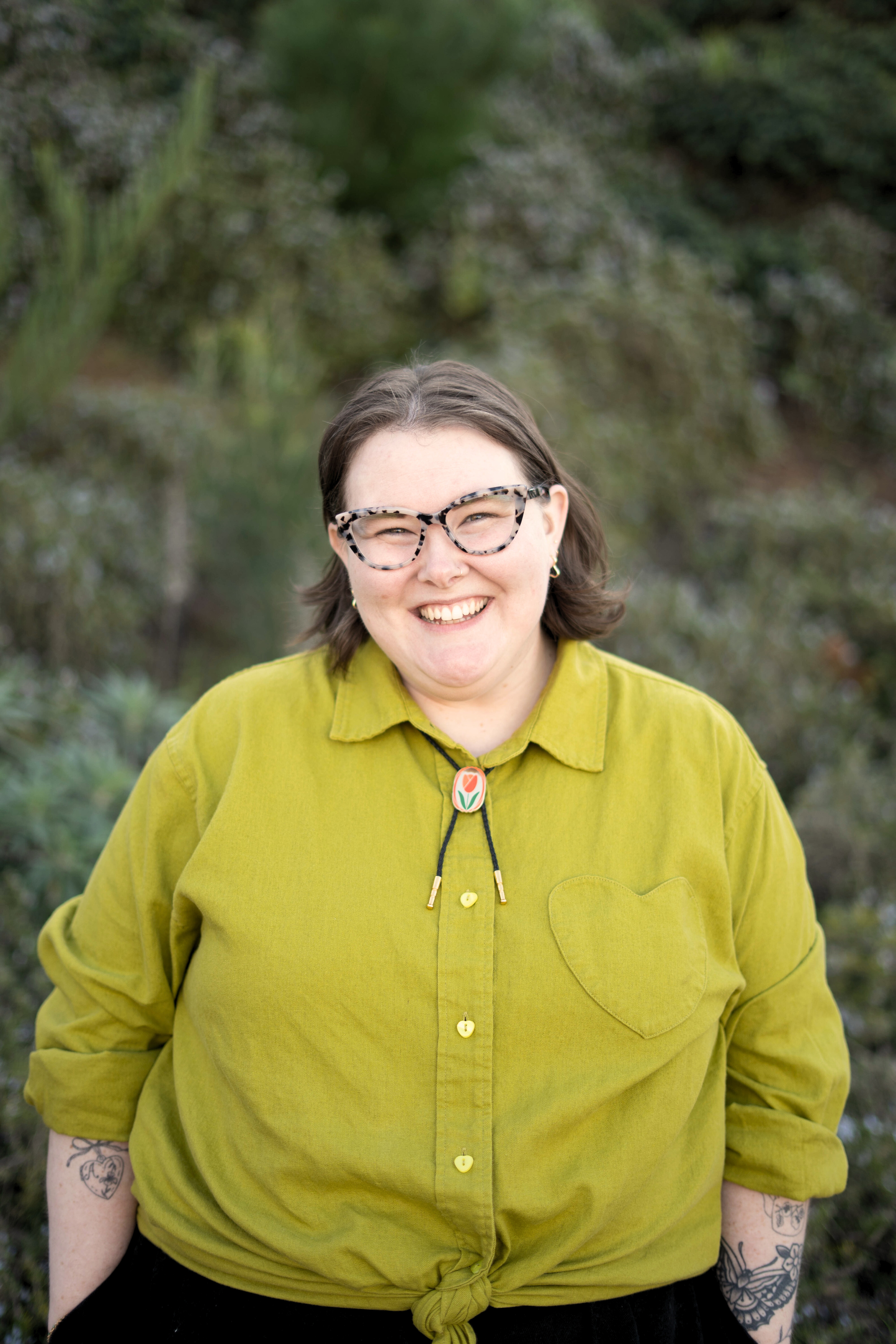
STEPHANIE HARIMOTO, LMFT
Hi, I'm Stephanie, a Licensed Marriage & Family Therapist specializing in trauma-informed, neurodiversity-affirming care for adults. I’m also a late-diagnosed ADHD-er and HSP.
Many of my clients come to me carrying the weight of a lifetime of feeling like they just can't get it together, even when they're clearly trying harder than anyone around them. Some have a recent diagnosis. Some are piecing together their own history without one. What they share is a deep exhaustion from working against their own nervous system for years.
Neurodivergent affirming therapy means I'm not here to help you perform neurotypicality better. I'm here to help you understand yourself, grieve what the masking cost you, and build something more sustainable.
You've always been enough. You've just been working without the right tools.
GET THE ANSWERS YOU NEED
Frequently Asked Questions:


-
It means therapy that starts from the assumption that your brain is not broken. Rather than focusing on making you appear or function more neurotypically, neurodivergent affirming therapy centers your actual experience — including sensory sensitivities, emotional intensity, executive function challenges, and the impact of spending years adapting to environments that weren't designed for you. We work with your nervous system, not against it.
-
Yes — and those feelings often coexist with relief, which can itself feel disorienting. A late diagnosis can bring up a lot: grief for the support you didn't have, anger at what was missed, questions about who you might have been without the years of masking. All of that is welcome here. There's no right way to receive a diagnosis, and therapy is a space to make sense of what it means for you.
-
Yes. A formal diagnosis is not required. Many people I work with are in the process of exploring what neurodivergence means for them, or have a strong sense of their own experience without formal evaluation. You don't need a label to deserve support, and we can do meaningful work regardless of where you are in that process.
-
Many neurodivergent people have had therapy experiences where their symptoms were pathologized, their communication style was misread, or their nervous system needs weren't accommodated. I try to make the therapy space itself flexible — in pacing, communication, and what "progress" looks like. If something isn't working, I want to know. We can adjust.
-
My fee for services is $225 per 50-minute session. I have a limited number of sliding scale slots that will be prioritized for BIPOC or LGBTQIA+ clients. There is no guarantee that any of these will be available at the time you call. Please let me know if you need sliding scale fees during our consultation call.
I am currently an out of network mental health provider. I am happy to provide you a superbill each month to give to your insurance. Please check with your insurance about your out of network mental health benefits — many of my clients receive reimbursement.
[If you are a Utah resident, please reach out regarding therapy rates.]

NEED SOMETHING ELSE?
Other Services
THERAPY FOR TRAUMA & PTSD
Neurodivergent people experience trauma at higher rates, and are often less likely to have had it recognized or treated. If your nervous system has been in survival mode for so long it feels like your baseline, trauma-informed therapy can help you understand what happened, why your body responds the way it does, and how to find steadiness that doesn't require constant effort.
_____
⟡ Trauma-informed care that accounts for how neurodivergence shapes your experience
⟡ Support for processing without retraumatizing your already-taxed nervous system
⟡ Somatic and attachment-based tools to rebuild safety in your body
⟡ A gentle, consent-based pace — no forcing, no rushing

ANXIETY TREATMENT
For neurodivergent people, anxiety often gets misread, or missed entirely. What looks like worry or overthinking is frequently a nervous system that has been in overdrive for years, managing sensory overwhelm, social exhaustion, and the constant low-level effort of existing in a world that wasn't designed for how you're wired. If you've been told to "just relax" or that you're overreacting, you deserve a therapist who understands what's actually happening.
_____
⟡ Support for anxiety rooted in neurodivergent nervous system patterns, not just thought patterns
⟡ Tools that work with how your brain actually processes, not against it
⟡ Help distinguishing anxiety from sensory overload, burnout, and masking fatigue
⟡ A space where your intensity is understood, not pathologized

LGBTQIA+ THERAPY
Many neurodivergent people are also queer, and the intersection of those identities carries its own particular weight. You may have spent years being told your intensity, sensitivity, or way of connecting was "too much," in both neurodivergent and LGBTQIA+ contexts. Here, you don't have to shrink either part of yourself. Your full story is welcome.
_____
⟡ Affirming care that holds both neurodivergent and queer identities without hierarchy
⟡ Support navigating family, cultural, or religious pressure that targets both
⟡ Space to explore identity without having to justify or explain yourself
⟡ Tools for managing anxiety, shame, and the exhaustion of masking across multiple contexts


EMDR Therapy
For neurodivergent people, EMDR can be particularly powerful, and it's also worth knowing that the standard protocol sometimes needs to be adapted. Sensory sensitivities, dissociation, and a nervous system already running in overdrive can all affect how the process works. I approach EMDR with your specific nervous system in mind, adjusting pacing and method so the work feels safe rather than overwhelming.

READY TO START WITH A NEURODIVERGENT AFFIRMING THERAPIST IN SIERRA MADRE, CA?
Let’s do it!
You've spent long enough working harder than everyone else just to keep up. Let's build something that works with your brain instead of against it. Reach out to schedule a free consultation. Your healing is possible.